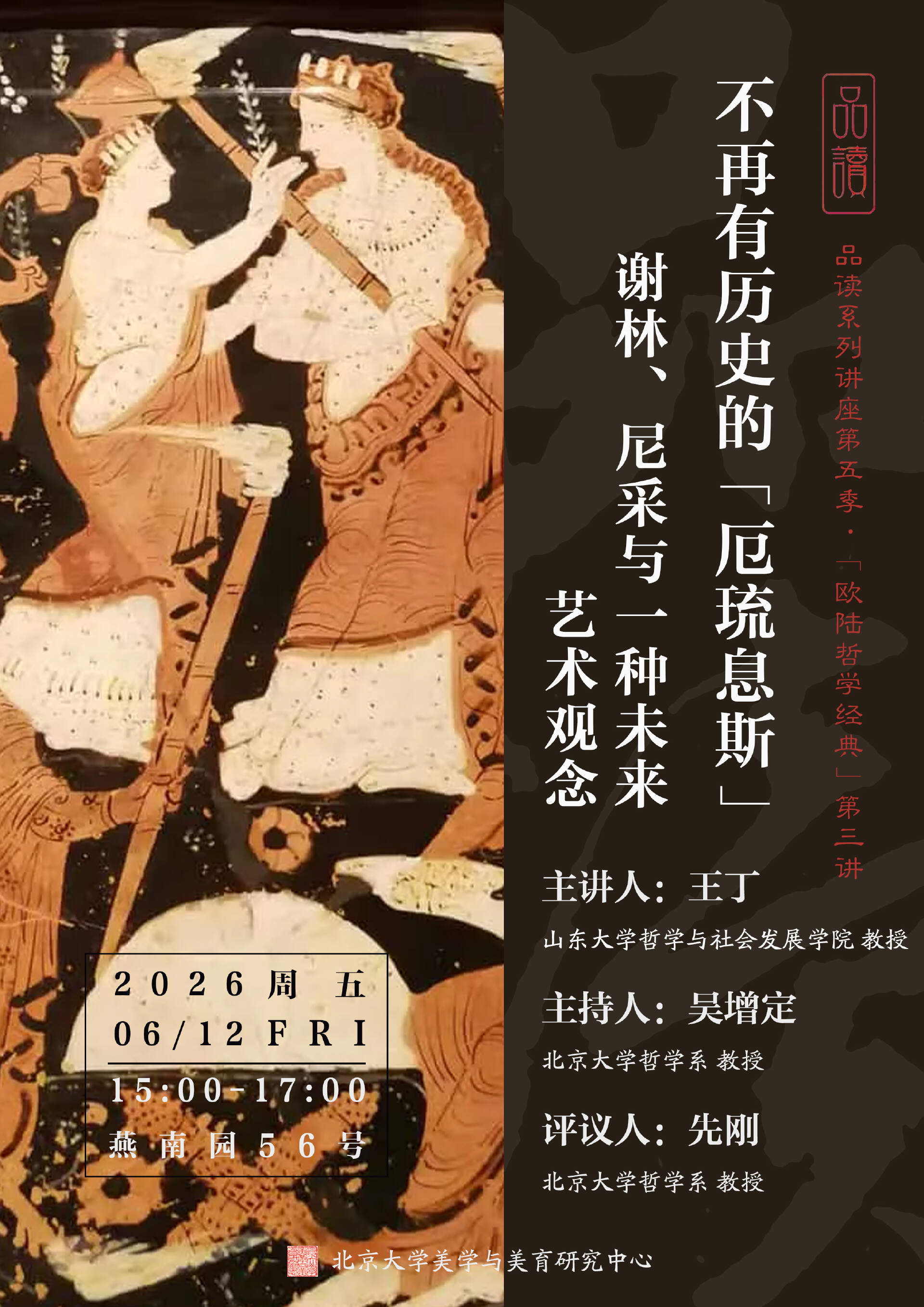


No Longer a Historical ‘Eleusis’: Schelling, Nietzsche, and a Conception of Future Art
Time
Fri 12 Jun 2026, at 15:00
Place
No. 56, Yannanyuan Garden, Center of Aesthetics and Aesthetics Education
Speaker
WANG Ding, Shandong University
Language
Chinese
This is the 3rd lecture of the Classics of Continental Philosophy, Season 5 of Pindu Series.
Abstract
Friedrich Wilhelm Joseph Schelling was the first thinker to recognize the significance of Dionysian art in the transformation of human history from antiquity to modernity. Yet he continued to situate the “Eleusinian” art associated with Dionysus within a strongly historicist framework, making it an integral moment in the grand “Divine Comedy” of world history. After proclaiming the “death of God,” Friedrich Nietzsche articulated a form of art free from any predetermined historical direction. In today’s Anthropocene, the question of how we might once again derive a new orientation toward the future from Dionysian art has become a fundamental task for both future philosophy and future art.
谢林是第一个重视酒神艺术在人类历史古今之变中意义的思想家,但他仍以一种强历史主义的方案,让围绕酒神展开的“厄琉息斯”艺术成为了通向世界历史”神曲“的一个内在环节。在宣称”上帝死了“以后,一种无历史定向的艺术在尼采思想中得到了表达。在当今人类世,我们如何重新从酒神艺术中获得新的未来定向,是未来哲学和未来艺术的一个根本课题。