

Reports
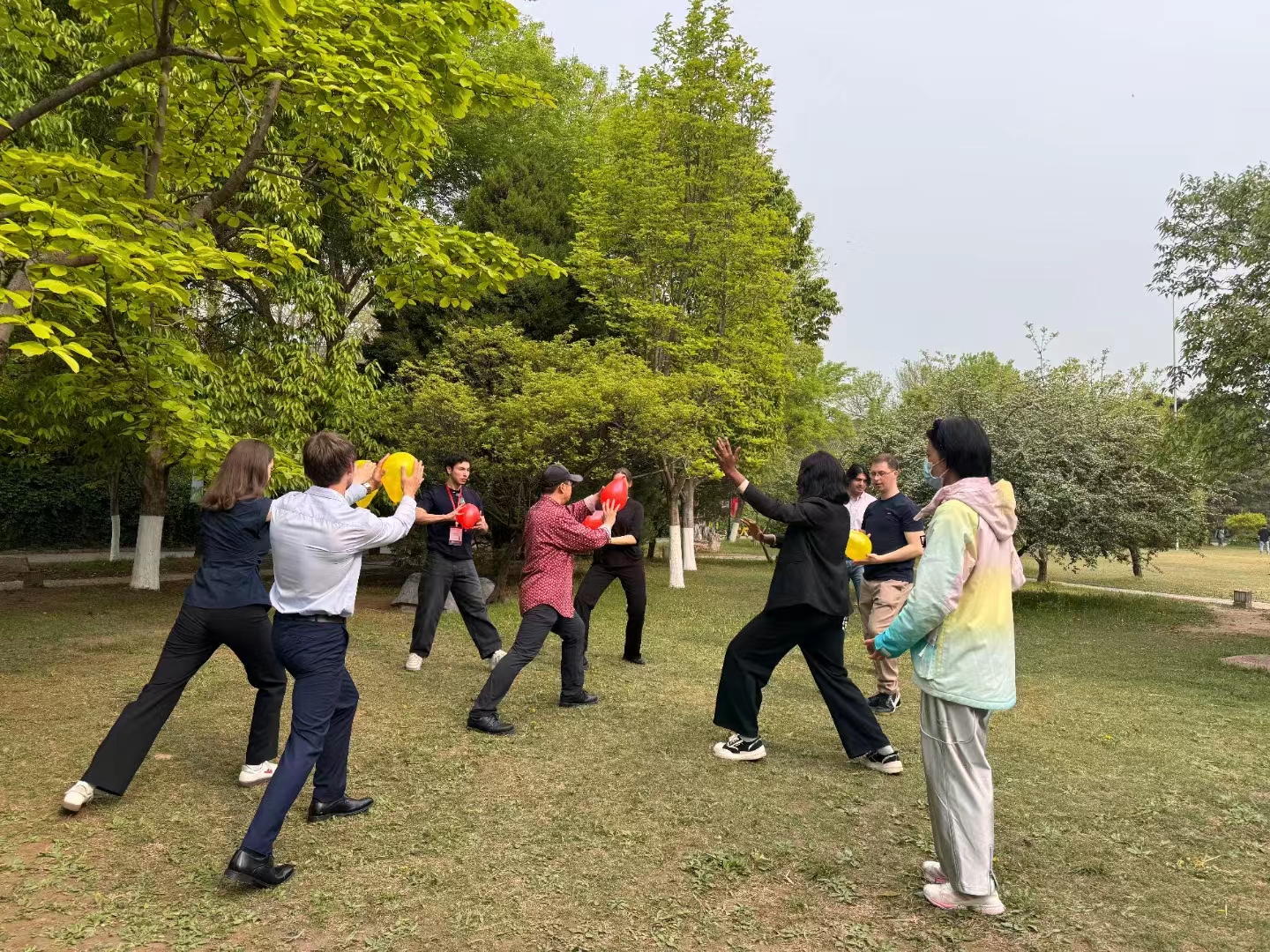
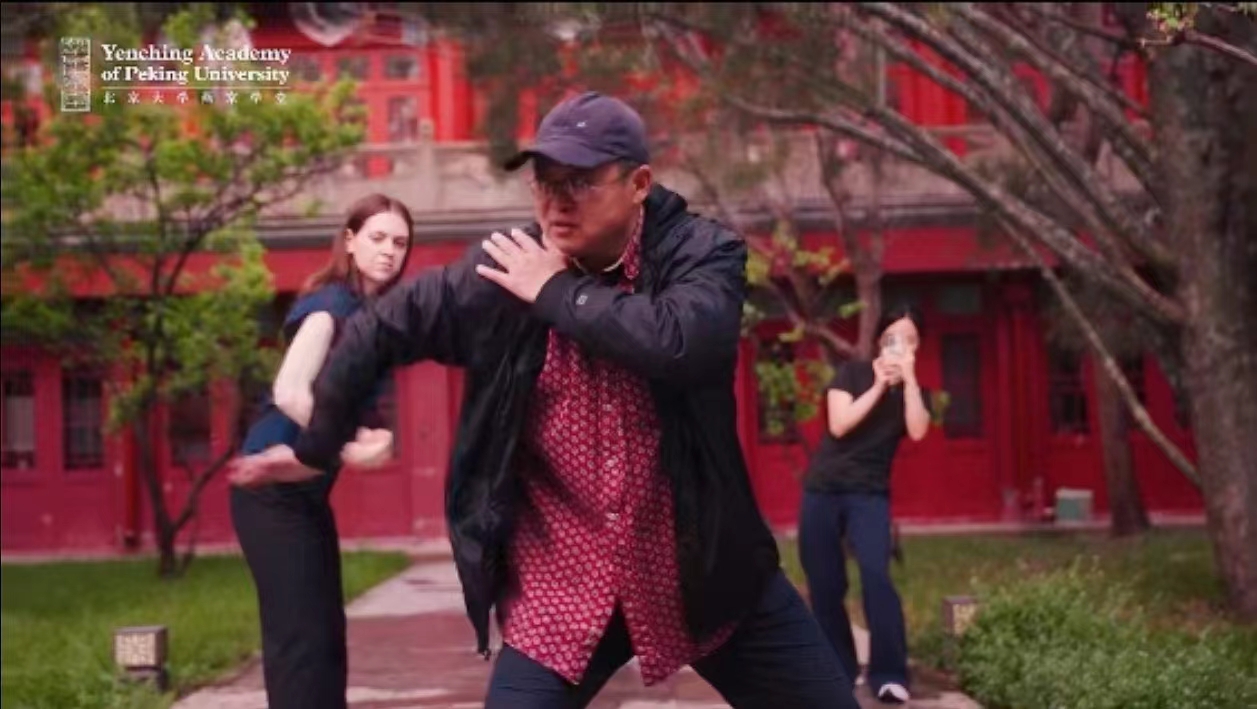
On April 19, in the morning sunlight at Jing Yuan Garden of Peking University, Professor Zhu Xiaomin, from the department of philosophy and religious studies, led Chinese and international students in a session of traditional Tai Chi practice. This marked the 292nd of such activity organized through his course, “Traditional Tai Chi: Philosophy and Practice.”
Unlike regular class events, this session was a highlight of the 2026 Yenching Global Symposium, which gathered around 100 young talents worldwide at PKU to discuss key global and China-related topics. Amid a convergence of different voices, the shared practice of Tai Chi emerged as a bridge between fields—highly absorptive of each individual’s experience.
Central to the session was Professor Zhu’s concept of “One Square Meter of Tai Chi” (“一平米太极”), the theme of his lecture at the Symposium. He illustrated that the space enough for a squat is enough for the essence of Tai Chi to seep in: not to compete for the “stronger, higher, faster,” but to loosen one up for resilience, while not losing one’s inner strength.
Another signature idea, “One Person Makes One Tai Chi” (“一人一太极”), holds that every single one has a unique and complete system of Tai Chi. Echoing this principle, Janet Ling (凌毓宸), a student of Professor Zhu from PKU Law School, offered her translation of a core concept: “Loose but not lost, stick while not stuck” (“松而不懈,紧而不僵”)—a state where one can yield without collapsing, and engage without stiffness.