


Symposium Review of "Marx's View of Labour and Philosophical Anthropology"
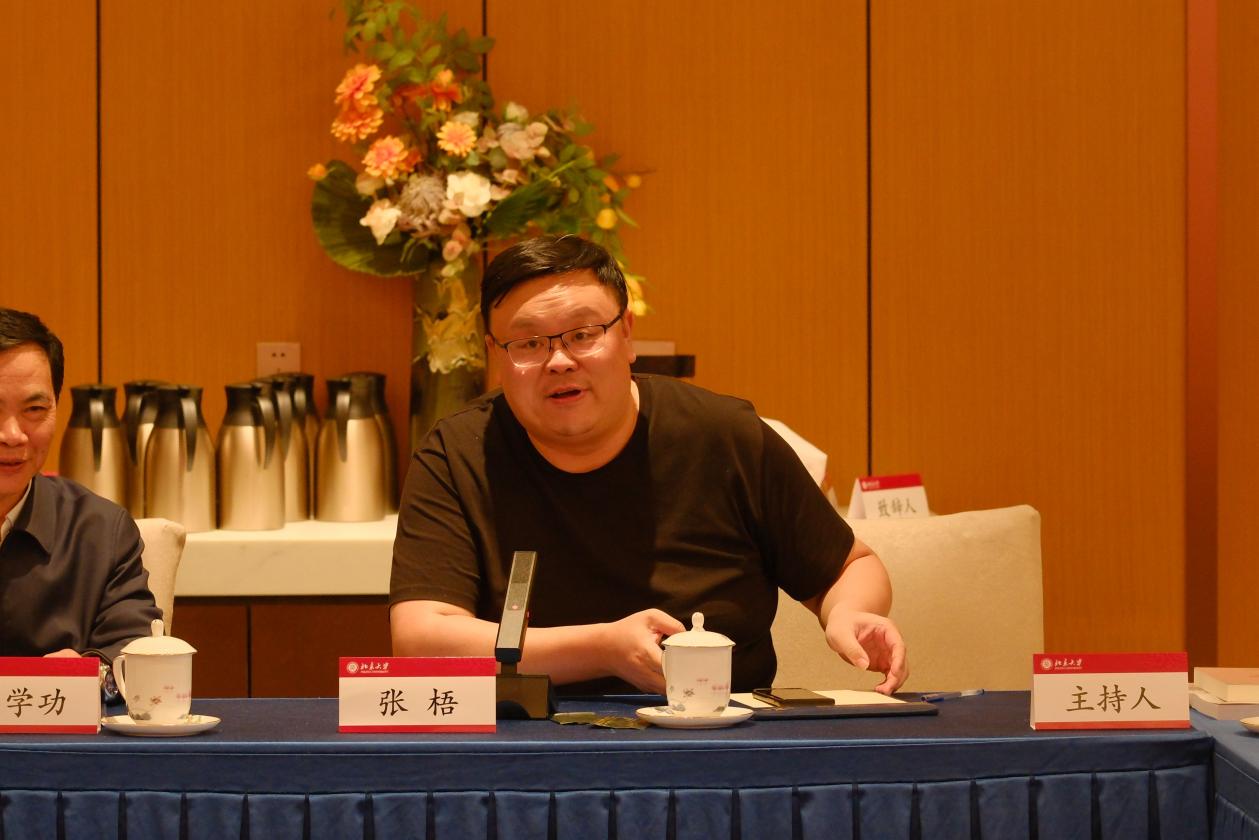
From May 9 to 10, 2026, the symposium "Marx's View of Labour and Philosophical Anthropology" was held at Peking University. It was organized by the Department of Philosophy (Department of Religious Studies) of Peking University, the Peking University Center for Marxist Philosophy, the Peking University Center for Humanistic Studies, and the Peking University Research Center for the System of Socialism with Chinese Characteristics. The opening ceremony was presided over by Zhang Wu, Deputy Director of the Department of Philosophy (Department of Religious Studies) of Peking University.
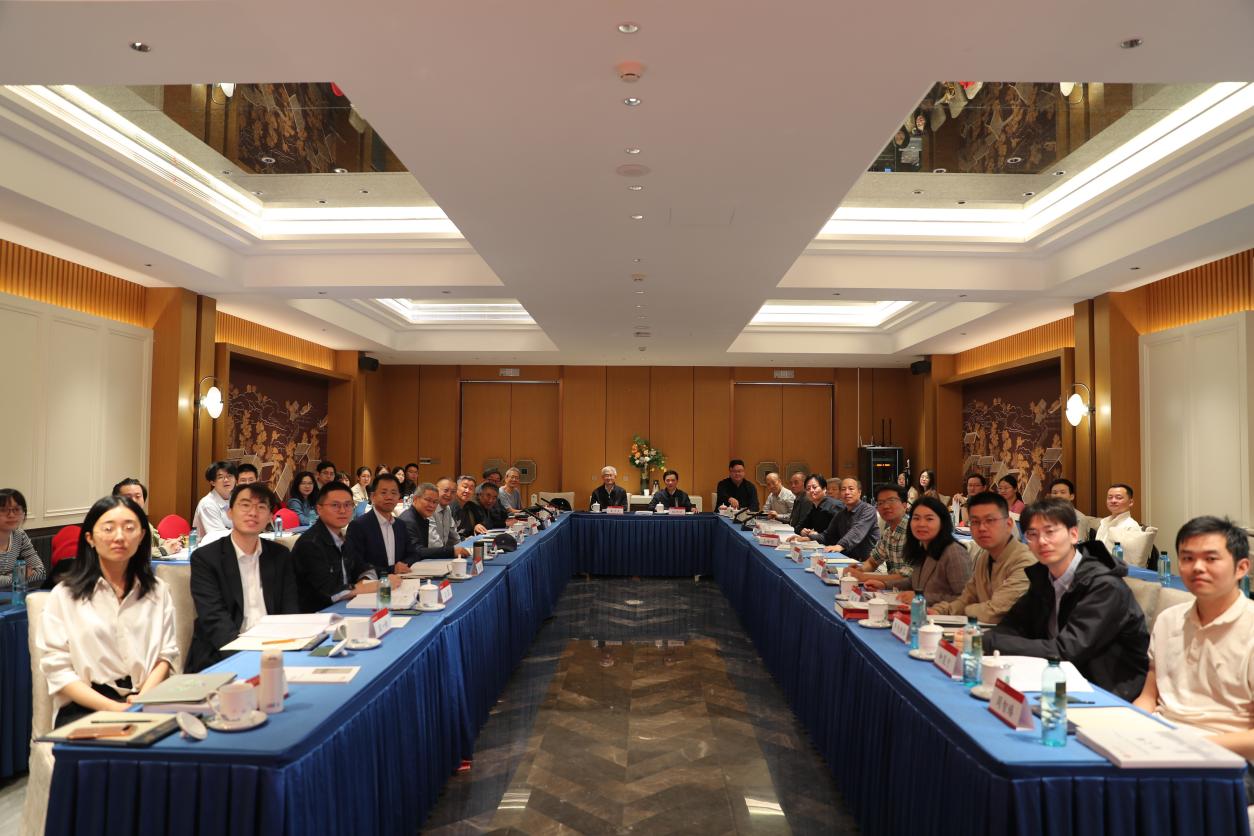
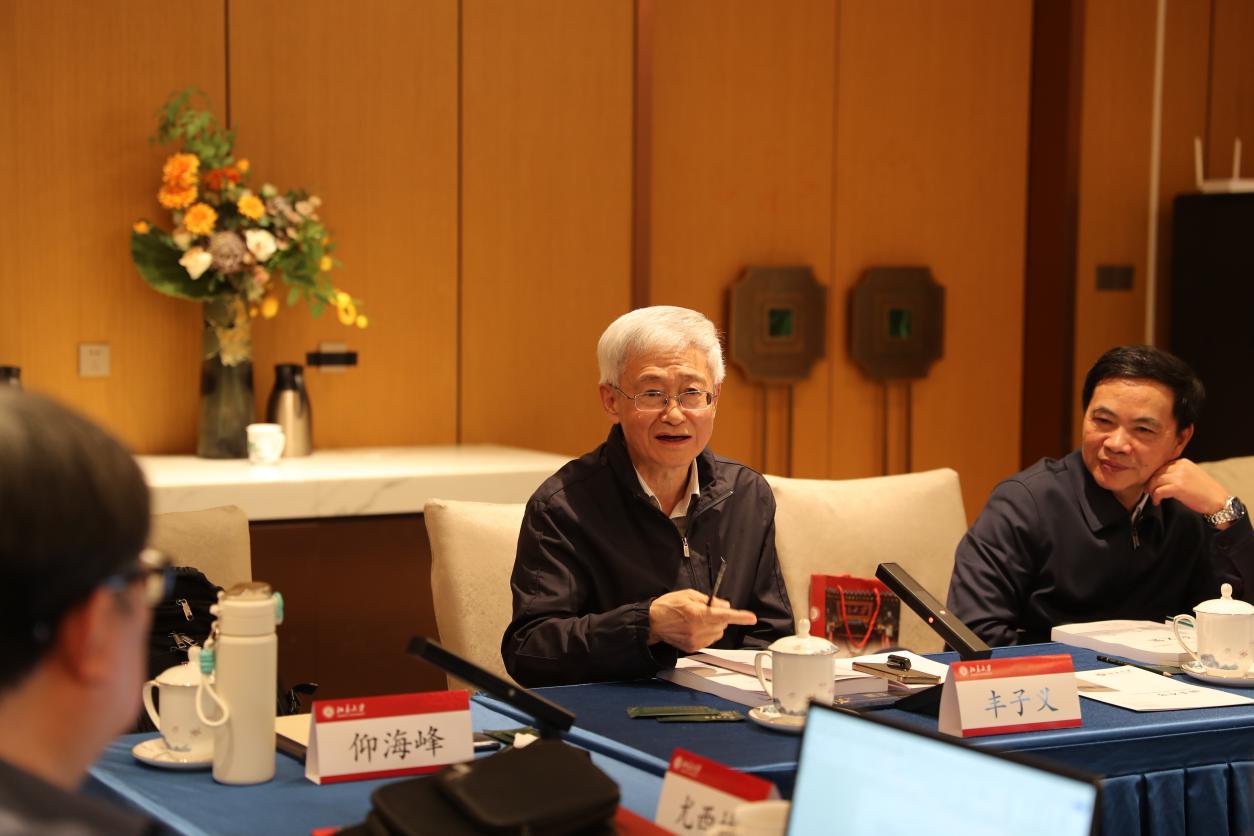
Feng Ziyi, Peking University Boya Distinguished Professor, delivered the opening address. Professor Feng Ziyi fully affirmed the theme of the symposium, arguing that Marx's two major discoveries are inseparable from Marx's view of labour. First, Marx's view of labour is of great significance for understanding Marx's first major discovery, namely historical materialism. Engels summarized his and Marx's philosophy as "the new trend that found the key to understanding all social history in the history of labour development." Marx also explained the emergence and development of humanity, and the essence and laws of society based on labour. Second, without the theory of the dual character of labour and the labour theory of value, there would be no Marx's second major discovery—the theory of surplus value. The theory of the dual character of labour is the key to understanding political economy. Political economy starts from the commodity, which in essence starts from labour. On this basis, Marx scientifically revealed the law of motion of the capitalist mode of production. Third, Professor Feng Ziyi raised the issue of the articulation between Marx's two major discoveries, emphasizing that the endpoint of the formulation of historical materialism precisely marks the starting point of Marx's political economic research. Finally, Professor Feng Ziyi pointed out that philosophical anthropology can be understood in both a broad and a narrow sense. He argued that there is no need to rush to define what philosophical anthropology is; rather, one should start with problem-oriented research, not build a system first and then fill it with content. A system emerges naturally from research on problems and content.
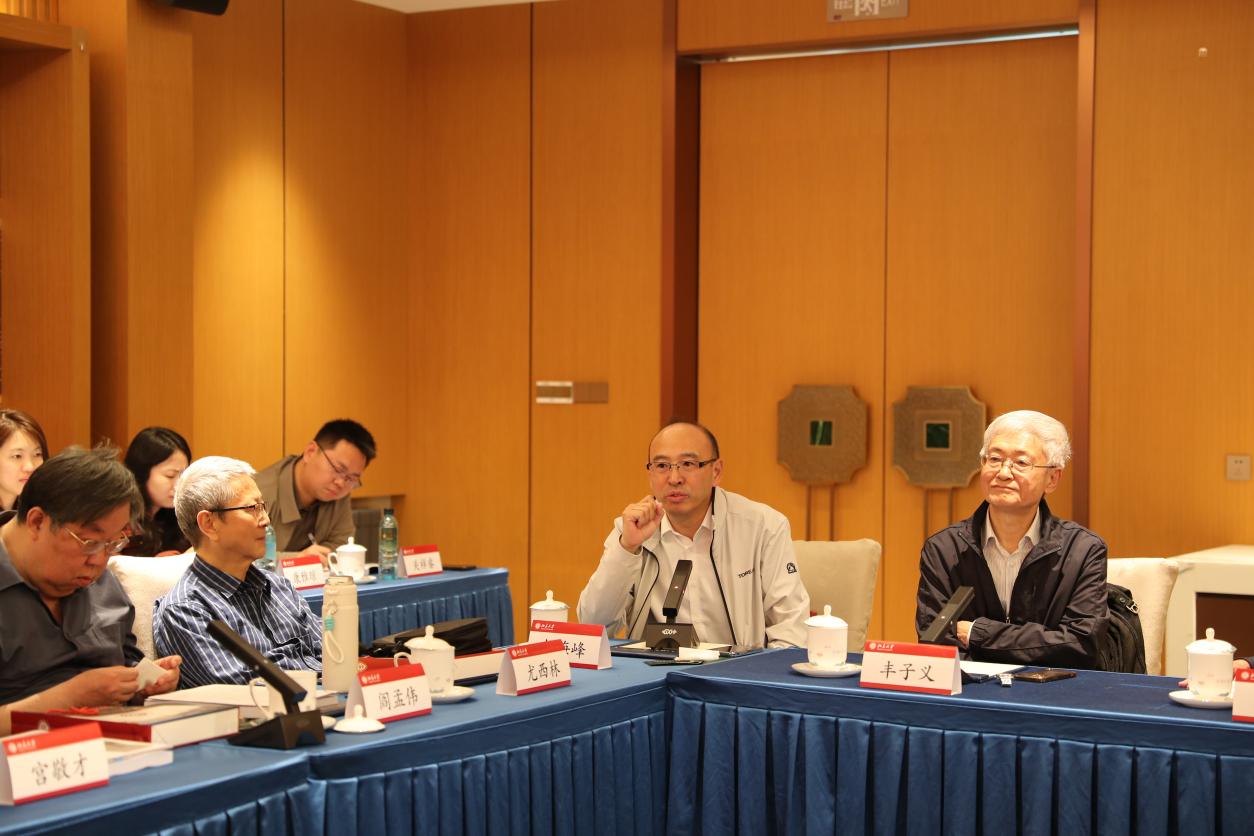
Yang Haifeng, Director of the Peking University Center for Marxist Philosophy, delivered an opening address. Professor Yang Haifeng noted that discussing Marx's view of labour in conjunction with philosophical anthropology holds significant theoretical importance. Professor Yang Haifeng pointed out that Hegel not only elevated the concept of labour to a philosophical concept during his Jena period, but also linked labour to the formation and construction of human beings in The Phenomenology of Spirit. He also criticized civil society through the concepts of labour and division of labour, which greatly influenced Marx's general concept of labour and the logic of production. However, simply applying historical materialism and its logic of production to the critique of political economy cannot yield the important conclusions of Capita. In fact, Marx believed that starting from the general labour process cannot lead to an understanding of the capitalist production process; therefore, one must proceed inversely, examining the labour process and the valorization process together. In capitalist production, if the general labour process cannot achieve valorization, it has no reason to exist, which leads to the domination of the general labour process by the production process of surplus value. In this context, and drawing on psychoanalytic discussions, it is necessary to distinguish between the concepts of "need" and "desire," which correspond respectively to material production and surplus value production. The capitalist mode of production drives the continuous production of surplus value by creating and stimulating infinite desires, thereby embedding human subjectivity deeply into the logic of capital accumulation.
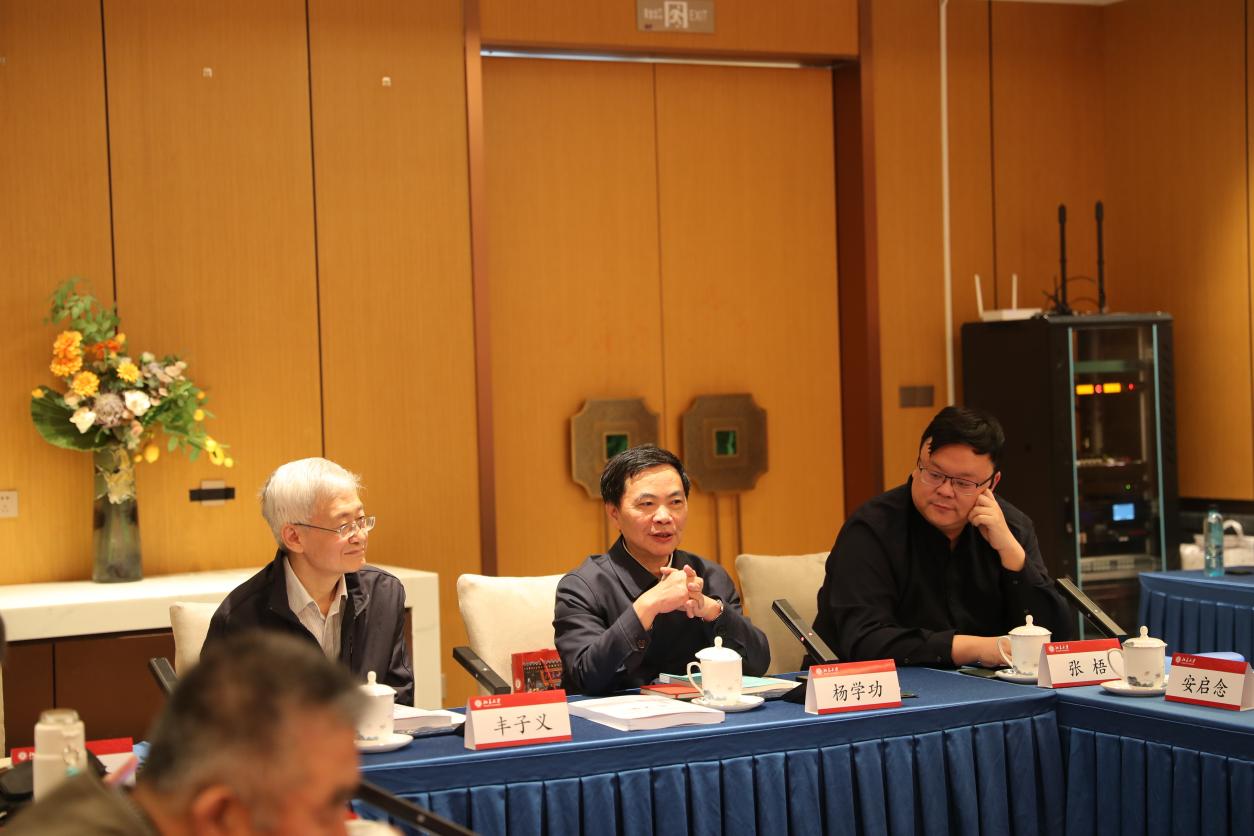
Professor Yang Xuegong of the Department of Philosophy at Peking University explained the origin and theme of the symposium. Professor Yang Xuegong first expressed warm welcome and heartfelt thanks to all the participating experts. He pointed out that Marx's concept of labour has multiple dimensions, including concrete labour and abstract labour, productive labour and unproductive labour, alienated labour and free labour, among others. These ambiguous concepts of labour can be divided into two levels: on the one hand, the concept of labour as historical anthropology, where the first historical act of human beings is the production of material life, which is the eternal condition of human society and undergoes continuous morphological changes with the adjustment of production relations. On the other hand, the concept of labour as philosophical anthropology runs through Marx's thought throughout, encompassing two aspects: first, labour as the essential characteristic of humanity, distinguishing humans from animals through the production of their material life; second, labour as the realization of human freedom, which frees humanity from external constraints and enters the realm of freedom. Based on this, the symposium aims to re-examine the essence of humanity and its generative mechanism through the core category of labour, and further explore theoretical paths to transcend the logic of capital and realize the free and all-round development of human beings.
Two seminar sessions were held on the morning of May 9. The first session was chaired by Professor Feng Ziyi, Peking University Boya Distinguished Professor.
Professor You Xilin from the School of Chinese Language and Literature, Shaanxi Normal University, presented a report titled "The External and Internal Purposes of Labour: Marx and Aristotle." Professor You Xilin pointed out that the Aristotelian view of labour, based on sacrifice and expenditure as external purposes, has dominated the general mindset from slavery and wage labor to modern livelihood earning, and has conversely nurtured hedonism and nihilism that reject labour. Introducing Aristotle's theory of actualization (energeia) into the already established concept of labour-praxis could activate dynamic research on the state of Marx's praxis and labour. Marx unified the internal and external purposes, which were divided in class society, into the structure of labour for human self-formation. He correspondingly transformed Aristotle's metaphysics of the internal purpose-generating mechanism—energeia (actualization) and entelecheia (complete actualization)—into living labour and free labour, respectively, turning them into a historical process of the objectification of human essence. This transformation of conceptual history is based on the evolution of the mode of production and the history of socialization. Free labour, as an internal purpose, is both the goal of development and the driving force of living labour. Its full development and innovation are based on the transformation of external purposes into internal purposes, covering all principles of action from physical transformation to virtualization and communication. This also defines the foundation and limits of the latest technological carrier of external purposes, i.e., artificial intelligence.
Professor An Qinian from the School of Philosophy, Renmin University of China, presented a report titled "A Brief Discussion on Marx's Dialectics of Labour-Praxis." Professor An Qinian noted that the dialectics of labour-praxis refers to the self-development of human society, nature, and humanity itself, driven by labour-praxis. From the perspective of labour, humans and human society are the subjects of labour-praxis, while nature is its object. Their development is also the development of labour-praxis itself. In Hegel, dialectics is the self-development and self-perfection of concepts driven by their internal contradictions; the movement and development of the objective world are merely the externalization and expression of conceptual dialectics. The three laws of dialectics, among others, were summarized by Engels from Hegel's works in his study of the dialectics of nature. Marx's dialectics of labour-praxis developed Hegel's dialectics, but it speaks not of the self-evolution of concepts, but of the co-development of human society, nature, and humanity itself, driven by labour-praxis. Labour continuously changes the productive forces, changes human social and natural environments, and thus changes humanity itself. This is Marx's complete thought on historical materialism, which explains all of history materialistically through labour-praxis, manifesting as a grand historical materialism that focuses not only on social development but also on the development of nature and humanity, with the development of humanity at its core.
Professor Yan Mengwei from the School of Philosophy, Nankai University, presented a report titled "The Concepts of 'Labour' and 'Value' in Marx's Labour Theory of Value." Professor Yan Mengwei pointed out that in Marx's labour theory of value, the concept of labour, especially "living labour," has strict limitations; the concept of labour should not be abused. The concept of "labour" in Marx's labour theory of value has three determinations: First, defining labour as "free conscious activity" from the perspective of "life activity"—this is Marx's philosophically ontological definition of "labour" in the Economic and Philosophic Manuscripts of 1844, encompassing all human practical activities. Second, the view of labour expressed in the Theses on Feuerbach and The German Ideology, which understands the material production activity carried out daily as the most fundamental practical activity—this concept of labour emphasizes the socio-historical determination of productive labour. Third, Marx's analysis and definition of the general concept of labour in the material mode of production in Capital and its manuscripts. The so-called general concept of labour refers to "labour as a process between human and nature, in which human beings, through their own activities, mediate, regulate, and control the metabolic interaction between themselves and nature." This is Marx's most rigorous, clearest, and most precise understanding and definition of material productive labour from the perspective of political economy.
The second session was chaired by Professor Yang Xuegong from the Department of Philosophy, Peking University.
Professor Wang Nanshi from the School of Philosophy, Nankai University, presented a report titled "Can We Still Uphold the Proposition that 'Labour Created Humanity' in the Age of AI?" Professor Wang Nanshi pointed out that the "human" in Engels' proposition "labour created humanity" is an incomplete, open-ended being. The understanding of this proposition must be placed within the perspective of the new materialism concerning the generativity of humans and their world—that is, within the perspective of a Marxist philosophical anthropology that bridges physical anthropology and socio-cultural anthropology. From this perspective, the proposition becomes: "human" is created by beings possessing the potential for "humanity" through their mutual interaction with their world—in other words, through their labour. Thus, this interaction with their world, especially labour as the fundamental interaction, is the necessary path for beings with the potential for "humanity" to become "human." When we understand "labour created humanity" as the creation of beings with the potential for "humanity" through labour, which is their interaction with their world, we actually obtain a new perspective for viewing the problem of human labour in the AI era. This new perspective is nothing other than understanding the self-creation of humans through labour as a continuous historical process characterized by "acquired inheritance" since the emergence of humanity.
Professor Gong Jingcai from the School of Philosophy and Sociology, Hebei University, presented a report titled "Marx's Thought on Labour Philosophical Anthropology." Professor Gong Jingcai pointed out that in the context of the three disciplines of Marxism, there is no formulation of Marx's labour philosophical anthropology, nor are there corresponding research results. The immediate reason for this theoretical structure is Engels' division of Marxism into three components, which leaves no theoretical logical space for the expression of Marx's labour philosophical anthropology. In fact, the disciplinary nature of Marx's labour philosophical anthropology is the integration of multiple disciplines with philosophy at its core. Human beings' essential determination as a species is the core content of Marx's philosophical anthropology. The essential difference between humans and animals is that humans engage in the production of material means of subsistence, and the subjectification and dynamization of the production activity is labour. Humanity as a species is the result of comparison with animals. The essence of the species could be language, or rationality, etc., but these species-essential characteristics are only results; the cause behind the results is labour. At the same time, labour not only produces language and rationality but also more directly produces society. A brief summary shows that the species-essence of humanity has three levels: the most fundamental level is labour, the second level is society, and the top level includes language, rationality, and so on.
Professor Cai Hua from the Department of Sociology, Peking University, shared the latest achievements in sociological research on philosophical anthropology and offered some views on future paths of research in philosophical anthropology. He believes that progress in philosophical anthropology research first requires adjustments at the methodological level, including but not limited to fieldwork and language acquisition. For humanities researchers, mastering another social science is very important. Only by grasping first-hand empirical facts and fully understanding the factual components and interrelationships of the research subjects can one have sufficient empirical support to critique previous research. For example, when studying anthropological issues, sociologists go into the field to observe all behaviors of specific research subjects over periods of a year or more, analyzing the causes of human behavior. Sociologists studying kinship systems have found that people's epistemological results concerning sexual organs and human reproduction often determine their specific kinship systems. What people hope and believe to be true is often taken as truth, suggesting a certain ontological isomorphism between belief, goodness, and truth.
Two seminar sessions were held on the afternoon of May 9. The first session was chaired by Associate Professor Xi Damin from the Department of Philosophy, Peking University.
Professor Zhang Shuguang from the School of Philosophy, Beijing Normal University, presented a report titled "Faith, Politics, Market, and Technology: 'Labour' in a Multidimensional World and Its End." Professor Zhang Shuguang pointed out that starting from "labour in general" and its "dual character" to understand the "objectification and its sublation" of labour, and even the free and all-round development of human beings, has not yet escaped the Hegelian-style conceptual deduction, i.e., speculative philosophy. It does not approach Marx's emphasis on "experience" and on the relationship between specific natural geographical environments and human activities when he founded historical materialism. Rather, it reinforces two tendencies in Marx's thought: first, a great simplification of society into binary oppositions; second, a "constructivist rationalism" moving from "spontaneity" to "consciousness." Although this was related to Marx's circumstances at the time, "all social history" and theoretical research show that the basic logic of modern human progress is a shift from the traditional pyramid structure to an elliptical structure under market economy, government regulation, and welfare systems, rather than a final life-and-death struggle between two great classes. Moreover, the instinctive, spontaneous aspects of human activity and the rational, conscious aspects each play their roles, jointly constituting the historical movement of humanity. Human labour activities embody the multi-dimensional and multi-directional nature of human nature, arise and unfold under multiple conditions and relations, and serve as the internal driving force for the changes and development of these conditions and relations. While making this multidimensional world increasingly complex and rich, labour continuously undergoes differentiation and transformation.
Professor Ding Liqun from the School of Philosophy, Heilongjiang University, presented a report titled "Labour, Cultivation (Bildung), and Cultural Praxis." Professor Ding Liqun pointed out that to understand cultural praxis, one must first understand culture. In a broad sense, culture refers to the sum total of material and spiritual wealth created by humanity in the course of historical development, including material culture, institutional culture, ideological culture, and conceptual-psychological culture. In a narrow sense, culture specifically refers to the institutional, ideological, and conceptual-psychological aspects within the broad sense. The broad sense of culture includes the narrow sense. Culture originates from labour. Labour is the essential mode of human existence and has anthropological-ontological significance. Human existence differs from the "specialized" existence of animals; humans are "unspecialized" beings. This original ontological characteristic makes humans inherently weaker than animals, but also endows them with a space for universal rationality, allowing them to compensate for this weakness with rationality and cultural creation. Both Hegel and Marx recognized this. Hegel believed that the means of animals are limited, while humans can transcend these limitations. Marx said that animal production is direct and one-sided, while human production is comprehensive. Therefore, the underlying logic of labour is constructed by the original "unspecialized" existence of humans and the action and practical process of "self-perfection." Original labour is the root of cultural praxis.
Professor Xu Changfu from the Department of Philosophy, Sun Yat-sen University, presented a report titled "The Tension in Marx's Concept of Labour (Arbeit)." Professor Xu Changfu pointed out that Marx's concept of labour (Arbeit) contains a tension between organicism and inorganicism. This tension is manifested both in theoretical structure and historical narrative. In theoretical structure, on the one hand, Marx believes that the means of labour (Mittel) are extensions of the labourer's natural limbs, organs of his activity; on the other hand, he believes that the newly added value of labour is created solely by labour power, while the means of labour only transfer their own existing value without creating new value. The former view is a conscious organicism, while the latter can be called inorganicism; the two are actually contradictory. In historical narrative, on the one hand, Marx believes there is a transformation from humans using tools to tools using humans, manifested as the socialized large-scale machine production system as capital enslaving the entire working class. On the other hand, he believes that tools using humans can be transformed back into humans using tools, provided that dispersed individual producers unite into a collective social human being, turning the socialized large-scale machine production system into the organs of the social human being. The former reflects the process of labour moving from organic to inorganic, while the latter reflects the return of labour from inorganic to organic.
Professor Zou Shipeng from the School of Philosophy, Fudan University, presented a report titled "Non-Labour Time and Its Void in the Technological Society." Professor Zou Shipeng pointed out that modernity has intensified labour time (productive and work-related) and its surplus time. However, with the substitution of human labour by AI robots, a kind of non-labour time as pure void, completely different from labour time, has actually emerged. Non-labour time, in its original meaning, is time not spent working. The void of non-labour time refers to the pure void time in human life that is no longer dominated and occupied by labour time; it can no longer be defined as leisure or surplus as the remainder of labour, but simply as void. However, people accustomed to work and labour, when encountering non-labour time, quickly feel the emptiness or even nothingness of time; time without labour to fill it also brings a sense of nothingness. Therefore, we must confront the problem of void (nothingness) brought by non-labour time. Arranging non-labour time and its void requires drawing on traditional resources and understanding the various experiential modes humans have developed in responding to non-labour time, so that non-labour time does not become mere "idle passage" but rather fulfills human inner life activity and endows it with existential meaning.
Professor Nie Jinfang from the Department of Philosophy, Peking University, presented a report titled "From 'Labour Time' to 'Life Time': The Theoretical Implications and Contemporary Significance of the 'Working Day' Chapter in Capital." Professor Nie Jinfang pointed out that in the first volume of Capital, Marx examined the issue of the "working day" from the perspective of absolute surplus value production. He drew on extensive empirical material to reveal how capital, driven by its nature to relentlessly pursue surplus value, impacts and harms the physical constitution and spirit of workers. Revisiting the content of the "Working Day" chapter in Capital allows us to go beyond the traditional understanding that simply sees it as a measurement of working hours, grasping its profound reflections on the relationships between time, power, and life. Today, when capital has evolved from the plunder of "labour time" to the systematic planning and appropriation of nearly the entirety of "life time," it is very important to break through the traditional analytical framework of "labour time," excavate the essence of Marx's contemporary critique, and advance it to a new theoretical height. That is, re-studying Capital must be connected to writing its contemporary chapter. Marx faced industrial capitalism; we face digital capitalism and financial capitalism. Marx focused on workers in factories; we need to focus on knowledge workers, platform gig workers, digital laborers, and all modern people caught up in the logic of capital. But the logic of capital accumulation and its mechanism of human oppression revealed by Marx remain effective analytical tools.
The second session was chaired by Wang Zhiqiang from the “Chinese Social Science”editorial office.
Professor Wang Fengming from the School of Marxism, Tsinghua University, presented a report titled "A Multi-dimensional Interpretation of Marx's Concept of 'Labour'." Professor Wang Fengming pointed out that labour is a relationship between humans and nature, not a relationship between humans and humans, and certainly not a relationship between humans and their own thoughts. In this sense, political activities (such as government administration) are not labour, and cultural activities (such as education or sports) are not labour. Labour is an activity "which is determined by necessity and external purposes." "Just as the savage must struggle with nature to satisfy his needs, to maintain and reproduce his life, so must civilized man, and he must do so in all social forms and under all possible modes of production." This means: first, labour is necessary, cannot be avoided; second, labour is determined by external purposes rather than developmental purposes; third, labour is necessary in all societies and is the same everywhere. Material productivity, tool mediation, purposefulness, and conformity to law together constitute the essential characteristics of labour. The realm of freedom is the arena where human intelligence and creativity—scientific research, artistic creation, cultural and athletic talents, etc.—are freely displayed and developed as ends in themselves, thus essentially different from material production. It is in this sense that material production, i.e., labour, terminates there.
Professor Xia Ying from the Department of Philosophy, Tsinghua University, presented a report titled "The Advent of the Pan-Labour Era and the Crisis of the Labour Theory of Value." Professor Xia Ying pointed out that the "pan-labour era" depicts a scene where the boundaries of labour expand infinitely, penetrating every corner of life—from traditional factory workshops to zero-hour gig economies on digital platforms, from material production to emotional labour, cognitive labour, and even data production. All activities seem to be endowed with the potential attribute of "labour," quantifiable, exchangeable, and incorporated into the orbit of capital accumulation. Marx's analysis of the category "labour" in the Introduction provides a key to understanding this contemporary predicament. It reveals that "labour in general" is not an ahistorical, eternal truth applicable to all societies, but is precisely a product of the highly developed bourgeois society. It is under capitalist conditions, where individuals can easily move from one type of labour to another, that labour truly sheds its specific, concrete qualitative determination and becomes "the means of creating wealth in general." The contemporary "pan-labour era" is not the victory or universalization of labour; on the contrary, it is the result of labour being pushed to its ultimate abstraction within the capitalist framework. All activities can be considered "labour" precisely because they have been assimilated by the logic of capital and must obey the law of value.
Professor Bai Gang from the School of Philosophy and Sociology, Jilin University, presented a report titled "The Revolution of 'Production': From Ancient Greece to Capital." Professor Bai Gang pointed out that while ancient Greek economists recognized that production (labour) brings wealth, they primarily understood production within the sense of "household management" of personal property, ultimately explaining "production" (or rather, not vice versa) in terms of "wealth," resulting in a failure to understand and a hostility towards production. Later classical economists (and vulgar economists), although concerned with production in terms of the source of national wealth and explicitly articulating the labour theory of value, did not connect labour with freedom, ultimately only half-understanding production and despising it. In the history of economics, it is Marx, building on the classical political economy labour theory of value, who truly and comprehensively understood and praised production, making production the highest principle of action and creation. The mode of production is the lifeblood and Archimedean point of social development. To fundamentally change the inverted social relations and structures between humans and things in capitalist society, one must start by transforming the social mode of production. Marx links human freedom and happiness to labour, advocating that workers engage in "cooperative production" with pleasure, replacing the "political economy of capital" with a "political economy of labour," thus achieving the highest revolution of production.
Fang Bo, Tenured Associate Professor in the Department of Philosophy, Peking University, presented a report titled "Real Human Beings and Species-Beings: The Conflictual Perspective in the Critique of Hegel's Philosophy of Right." Fang Bo pointed out regarding the evaluation of civil society, there are two conflicting perspectives in the Critique of Hegel's Philosophy of Right. If one starts from the real human being, then compared to the human being as a bourgeois (citizen of civil society), the citizen (citoyen) should actually detach from their real ties in the family and civil society and participate in political life as an isolated, abstract individual. This means that the principle of individualism in civil society would also become the principle of the state. If one understands civil society from the perspective of the human being as a species-being (i.e., communal being), then the citizen (citoyen) within the framework of the separation of civil society and the political state truly conforms to the species-essence of humanity. In this sense, civil society, merely because of its principle of individualism, should be seen as a sphere alienated from the species-essence of humanity. True democracy naturally requires the transformation of this alien sphere of life, so that humans can act as complete human beings in all spheres of life and reappropriate their entire essence as species-beings. In the later On the Jewish Question, Marx completely abandoned the view that the real bourgeois should be the basis of true democracy, retaining only the normative perspective of the species-being to argue for political emancipation.
Two seminar sessions were held on the morning of May 10. The first session was chaired by Zhong Chenning, a young scholar from the School of Marxism, Shanghai Jiao Tong University.
Associate Professor Chen Guangsi from the School of Philosophy, Renmin University of China, presented a report titled "The Refoundation of Marx's Concept of 'Property' (Eigentum): Labour and Appropriation." Chen Guangsi deeply analyzed the concept of "Eigentum" in Marx's texts, arguing that it contains the meanings of "ownership," "property right," "property," and "possessions." Bourgeois ownership is based on "possession" (Besitz). Marx refounds the concept of "Eigentum" through labour and "appropriation" (Aneignung). "Aneignung" is widely used in the second part of MEGA2, mainly referring to the labourer's "taking possession of" the conditions and results of labour. Labour is the basic mode of appropriation, and appropriation through labour is essentially the appropriation, the taking back, of human essential powers. Thus, "Eigentum" becomes the concept of "ownership" formed in production and expressing the essential content of production relations. It takes common ownership as its original form and fundamental nature, pointing towards the future communist society, where the free association of individuals affirms and masters human essential powers and productive forces.
Wang Li from the School of Marxism, Renmin University of China, presented a report titled "The Anthropological Perspective in Capital and Its Manuscripts." Starting from the relationship between capital and labour, Wang Li discussed the anthropological perspective in Capital and its manuscripts. He argued that traditional research man-made a "rupture" in Marx, artificially creating a "theoretical insulation" between Marx's early philosophical anthropology (aiming for human liberation and freedom), his late social anthropology (aiming to solve the problem of human origins), and his middle-period critique of capital and political economy. In fact, Marx's anthropological perspective in Capital and its manuscripts, premised on the unity of humans and nature, systematically examines the emergence, development, predicaments, and resolutions of human society. It overcomes the mechanicalness of naturalism and the abstractness of humanism, emphasizing the process of nature becoming human society. Starting from the relationship between capital and labour, Marx undertakes four theoretical tasks: tracing the historical origins of capitalism, analyzing its internal contradictions, expanding its spatio-temporal boundaries, and exploring paths to transcend it. Thus, he not only incorporates an anthropological perspective into the critique of capital but also integrates the critique of capital into the domain of anthropology.
Li Xing from the School of Marxism, Nankai University, presented a report titled "Cohen's Puzzle: Is 'Self-Ownership' the Foundation of Marx's Conception of Justice?" Li Xing pointed out that Cohen mistakenly believed that Marx implicitly used "self-ownership" as the foundation and premise of his conception of justice; without this theoretical foundation, Marx's theory of justice would be untenable, and Marx's critique of the injustice of capitalist exploitation would lose its basis. In fact, "self-ownership" belongs to the category of bourgeois legal rights (Rechte), while Marx's communist society transcends the legal rights paradigm. Cohen's understanding of "self-ownership" confuses the two different dimensions of legal rights (Rechte) and emancipation. Under communist conditions, each individual's "autonomy" breaks through the bourgeois legal right category of "self-ownership" and belongs to the category of emancipation. The bourgeois conception of justice criticized by Marx is legal right justice based on self-ownership, but the communist justice pursued by Marx transcends legal right justice and belongs to emancipatory justice. Marx viewed the relationship between labour and justice from the perspective of his philosophical anthropology.
Song Yifan from the School of Philosophy, Fudan University, presented a report titled "The Resistance of the Real: On the Labour Anthropology of Dejours and Deranty." Song Yifan argued that French scholars Dejours and Deranty provide a new paradigm of "psychodynamics of labour." This paradigm emphasizes that at the level of subjective experience, labour always involves an unavoidable and insurmountable gap between prescribed labour and actual labour; at the social level, labour is closely related to recognition; at the political level, labour is a form of democratic life. The "psychodynamics of labour" shows that we cannot understand "labour" solely from a metaphysical or ontological perspective; we must recognize the diversity and richness of labour. The suffering and defense mechanisms in the labour process are necessary experiences for the formation of self-identity; the intrinsic connection between this suffering and reason will reactivate discussions on the priority of nature, object, and subject. The thesis of the centrality of labour demands that we understand the self-identity of the subject by facing the resistance of the real; it cannot be reduced to labour organization theory or power theory under "domination-resistance." The liberation of workers is inherently embedded in their own strategies and resilience.
The second session was chaired by Guan Xiangrui, a young teacher from the Department of Philosophy, Party School of the Central Committee of C.P.C.
Li Jingxinhong from the School of Philosophy, Beijing Normal University, presented a report titled "The Physiological Basis of Marx's Concept of 'Value'." Li Jingxinrong traced the debate between physiological and social interpretations of the concept of "value," examined the influence of physiological empirical knowledge on Marx, and argued that the physiological line of thought since Roland Daniels' Microcosm: Outline of a Physiological Anthropology prompted Marx to liberate labour from abstract philosophical anthropology, providing the concept of "value" with an empirical basis in the real labour process. Marx's concepts of "labour power" and "concrete labour" in Capital and its manuscripts reveal the key links through which the concept of value acquires real content. Through the concept of "labour power," Marx links the social form of value to the living human capacity. By analyzing "concrete labour," Marx explains the actual expenditure of this capacity in the production process. The human brain, nerves, muscles, senses, metabolism, fatigue, and recovery enter value theory precisely through this link of "labour power - concrete labour." Marx thus avoids both the physiological naturalism that would reduce value to human energy and the treatment of the value form as a pure social relation detached from the vital process.
Zhong Chenning from the School of Marxism, Shanghai Jiao Tong University, presented a report titled "The Analytical Marxist 'Normative' Reading of the Comments on James Mill and a Reflective Critique." Zhong Chenning argued that analytical Marxists display a theoretical attitude of "special emphasis" on the Comments on James Mill, reflecting their intention to construct Marx's normative thought. They attempt, through a "normative" reading of the Comments, to extract the two core value commitments of "self-realization" and "other-directedness," using them as inspiration for a socialist "social design." However, this reading strategy, based on the "feasibility-desirability" analytical framework, while achieving some results, pays the theoretical price of deviating from the core of Marx's thought. While Marx's Comments on James Mill is indeed imbued with an ideal dimension of interpretation, it consistently employs an immanent critique based on historicity and dialectics concerning the generation of value principles. The elements generated within the transformation of capitalist material production constitute the fundamental horizon for discussing normativity in Marxism. Appealing to ahistorical or transhistorical normative principles actually undermines the distinctive character of Marx's theory and diminishes its critical effectiveness against capitalism.
Niu Xiaoxue from the Department of Philosophy, East China Normal University, presented a report titled "The Division of Labour in the Age of Human-Machine Collaboration and Its Prospects." Niu Xiaoxue argued that labour in the AI era is more dependent on scientific and technological aggregates that transcend time and space, even species. Even if the labourer physically leaves the production line, the employment contract still demands their talents and intellect in a third space beyond production and daily life. The individual labourer appears to be performing creative interactions with algorithmic interfaces, but is actually participating, under the control of offline intelligence and its probabilistic machines, in a new paradigm of asynchronous collaboration across time and space, dominated by offline systems—reflecting the historical trend of "dead labour holding living labour captive." In an era where human-machine integration and symbiosis have become a major trend, we should seek a breakthrough in overcoming the old division of labour concerning the permissions and actual ownership of intelligent machines, shifting from "investing in computing power" to "investing in human collaborative capacity," fundamentally reversing the asymmetric power of production, so that modern society can build a true human community based on technological reality.
Zhou Zhizhen from the School of Philosophy, Nankai University, presented a report titled "A New Humanism? On 'Labour Created Humanity' in the Context of Contemporary Philosophical Anthropology." Zhou Zhizhen argued that alternatives proposed by Western scholars, such as the "holistic human being" or "natural human being," sever the essential connection between technology and human existence, failing to effectively address the theoretical and practical challenges of the technological age. Reviewing the relevant theoretical lineages of French technology anthropology and German philosophical anthropology reveals that technology is not an external tool for humans but an internal component deeply intertwined with the human body, evolutionary process, and subjective structure. Marx and Engels transcended traditional abstract humanism, constructing a new humanism centered on human post-ness and openness, emphasizing the deep interweaving of humans and technology. Marx's "labour created humanity" is a profound proposition of post-formationism, not pre-formationism, providing key theoretical support for understanding the essence of humanity in the technological context.
Two seminar sessions were held on the afternoon of May 10. The first session was chaired by Wu Yihao, a doctoral student from the Department of Philosophy, Peking University.
Wang Yue from the Department of Philosophy, Peking University, presented a report titled "The Collective Worker Behind 'Unmanned' Systems: A Contemporary Reflection on the Source of Value." Wang Yue argued that the rise of "unmanned factories" in the information and intelligence era has once again raised doubts about the status of living labour as the sole source of value. Proponents of technological singularity, based on the phenomenon of individual labour "leaving the scene," argue that intelligent machines have replaced living labour as the new source of value. In Marx's framework, the subject of value creation is abstract social labour, not concrete individual labour. Only by moving beyond the intuitive judgment of whether individual labour is present or absent and turning to an analysis of the combined labour of the collective worker can we reveal the intrinsic link between labour and value. From the perspective of the collective worker, living labour has not disappeared; rather, it has been integrated into the social division of labour and cooperation system in more hidden, decentralized, and hierarchical forms. As the scope of the collective worker's division of labour and cooperation continues to expand, living labour, in disembodied, immaterial, and digital forms, extends comprehensively across the three dimensions of space, time, and subject. This expansion of scope does not falsify the labour theory of value but rather confirms the socialized expansion of the scope of capital's exploitation.
Qu Wenxin from the Department of Philosophy, Peking University, presented a report titled "The Ontological Premise of the Unity of History and Value in Marx's Thought on Community." Qu Wenxin argued that interpretations of Marx's thought on community have long faced the dilemma of a "history versus value" binary opposition. To transcend the theoretical opposition between "historical necessity narrative" and "abstract critique of alienation," we must return to the logical origin of historical materialism, establish "real individuals" as the ontological foundation for the evolution of community, and use the historical changes of the "four historical elements" (material production, new needs, production of life, and social relations) as the core thread to re-understand the original context of Marx's thought on community. Humanity progresses from "naturally formed communities" to the capitalist "illusory community," ultimately to be replaced by a "true community." The "true community" achieves the unity of objective historical laws and subjective value norms on a practical basis through the reconstruction and positive sublation of the elements of existence, marking the transition of the human mode of existence from the "realm of necessity" to the "realm of freedom."
Wu Wencheng from the Department of Philosophy, Peking University, presented a report titled "The Philosophical Anthropological Dimension of Marx's Labour Ontology." Wu Wencheng argued that Marx's philosophical ontology is a labour ontology. Labour is the ontology with fundamental effects such as constructing being, mediating objects, and creating history. Its objects include humanized nature, social history, and the human being itself as the subject of activity. These three correspond to three research approaches to Marx's labour ontology: "labour-nature studies," "labour-society/history studies," and "labour-anthropology studies," with the labour-anthropology approach being the most central. Marx attributed the history of the world to the history of labour, and the history of labour ultimately rests on the history of human development. Starting from the labour-anthropology approach, the philosophical anthropological dimension of Marx's labour ontology can be summarized into three aspects: labour's ontological construction of human beings as object-oriented beings with subjective freedom, as inter-subjective beings with inter-subjective freedom, and as reflexive beings with individual freedom.
Liu Rundong from the Department of Philosophy, Peking University, presented a report titled "The Destruction of the Conditions of Productive Labour and the Reconstruction of Community: The Problematic Structure of Utopia and Its Political Economic Implications." Liu Rundong argued that the transition from feudal society to capitalist society not only changed the objective conditions of labour but more fundamentally changed the social meaning and determination of labour. While labour continued to serve as the basis of the metabolic interaction between humans and nature, it was also incorporated as abstract labour into the valorization process and became the core medium for the reproduction of capitalist relations, which goes beyond More's simple positive determination of labour in Utopia. The theory of ownership following the enclosure movements superficially rested on individual labour, emphasizing the identity of labour and ownership, but in capitalist reality it transformed into a law of appropriation where capitalists appropriate the labour of others without compensation. The transcendence of capitalist society cannot stop at More's critique of distribution or exchange relations, nor can it return to a concept of ownership based on individual labour private property. Instead, it must realize the true appropriation and control by workers of the common results of socialized production on the basis of socialized large-scale production.
Kang Junchuan from the Department of Philosophy, Peking University, presented a report titled "The Military Expenditure of Dead Labour and the Advance Appropriation of Living Labour: Reflections Based on Marx and Engels' Comments on the Crimean War." Kang Junchuan argued that the Crimean War was an important beginning for the comprehensive intervention of capitalist industrial productivity in violent conflict, and the comments of Marx and Engels on this war constitute a key node in the development of their revolutionary theory. Marx and Engels introduced labour theory, situating this war within the logic of large-scale capitalist industrial production, establishing a modern war paradigm centered on industrial output capacity: "dead labour" congealed in industrial products like weapons replaced the soldier's subjective agency as the dominant force determining victory or defeat in war. Large-scale pre-war borrowing transformed the military attrition of the present into an advance appropriation of the future fruits of workers' labour. The post-war pressure of debt repayment produced differentiated historical consequences for the belligerent nations (Britain, France, Russia), revealing the contingency of the opportunity for proletarian revolution in specific historical circumstances. This does not mean that Marx's judgment is invalid. As long as we recognize that the carrying capacity of capitalist society still has limits, and that "living labour" remains dominated and pre-appropriated by "dead labour," the political economic foundation for proletarian revolution will not lose its validity.
The second session was chaired by Qu Wenxin, a doctoral student from the Department of Philosophy, Peking University.
Zhao Ruiqi from the Department of Philosophy, Peking University, presented a report titled "The General Determination of Labour and Its Dual Orientation: A Re-examination of Marx's Paradigm of Historical Anthropology and Philosophical Anthropology." Zhao Ruiqi argued that both historical anthropology and philosophical anthropology are jointly founded on the general premise of labour. Labour in its general sense possesses purposefulness, conformity to law in relation to nature, and form-giving capacity. At the level of historical anthropology, labour as an activity of maintaining subsistence is mainly manifested as the production of material goods in the historical process and as wage labour, the specific form of labour under capitalism. Marx's critique of labour in capitalist society reflects a negative theoretical approach, aiming to realize free individuality by breaking through the obstacles to the development of productive forces given specific social conditions. At the level of philosophical anthropology, Marx focuses on the characteristics of labour contained in the realm of freedom, treating labour as free activity. In this context, he forms a positive, ascending path: through the development of productive forces achieving a historical transcendence of the realm of necessity, leading to the realm of freedom aimed at the free development of humanity.
Gao Yuguan from the Department of Philosophy, Peking University, presented a report titled "Probability and Segmentation: Reinterpreting Labour in the Assembly of Generative AI – An Attempt from a Deleuzian-Marxist Perspective." Gao Yuguan argued that the development of generative AI is shaking the traditional belief that "labour is exclusive to humans." Current debates about whether "AI can create" are陷入 a dilemma of "who produces," neglecting the specific form of production in human-machine interaction. The assembly of generative AI, the user's prompting, selection, and calibration reveal a kind of "segmented labour" (or "cutting labour"). AI does not create new value; the direction of value always comes from living labour. However, due to capital's monopoly on cutting-edge AI models, a mechanism of "AI rent" is emerging, whereby segmented labour, while becoming the source of the direction of value, is also absorbed by capital through the collection of rent. The tension between the production mechanism of desiring-machines and the logic of capital constitutes an unavoidable dual horizon for understanding the future of labour in the AI era.
Wang Shoukang from the Department of Philosophy, Peking University, presented a report titled "The Problem of 'Second Nature' in the Perspective of Modernization and Its Mechanism of Sublation." Wang Shoukang argued that the capitalist mode of production, on the basis of conquering and controlling nature, constructs a seemingly natural but actually human-made reified structure, namely "second nature." Its surface is the community in which everyone lives, with money as an alien power. Through inverted, reified social relations, it conceals the labour alienation and exploitation of workers by capitalists in the depths, caused by the exchange of objectified labour for living labour. Within this alienated reality, a dialectical force of self-sublation is gestating: the free time and cooperative models brought by the application of machinery and general intellect are reconstructing the labour process and forms of ownership, constituting a revolutionary force to break through "second nature." The sublation of "second nature" is not a return to a simple, primitive natural state, but points to a new, harmonious life community between humans and nature. Nature is no longer a useful object to be manipulated, but a living space where human life activities unfold and pursue their own free and all-round development.
Chen Yuping from the Department of Philosophy, Peking University, presented a report titled "Aesthetics or Labour? Reinterpreting Marx's View of Freedom." Chen Yuping's presentation focused on the question: Can freedom only be realized in the aesthetic realm, or can it be realized within the realm of productive labour? She argued that the aesthetic view of freedom, which holds that freedom can only be realized in artistic creation and aesthetic activities free from the constraints of necessity, exhibits a pessimistic color. The labour view of freedom, incorporating Cohen's dialectic of labour, argues that labour in the future society transcends alienated labour and becomes a field of freedom and self-realization, but it has been accused of harbouring romantic fantasies about labour. Dialectics demands their combination, and the combination of the two is possible at the logical, theoretical, and practical levels, thus constituting Marx's aesthetic-labour view of freedom. The aesthetic-labour view of freedom maintains that the realization of freedom lies in a labour activity that is both rule-conforming and purposeful. It seeks to reassert, from the standpoint of historical materialism, the creative subjectivity of labour and the ultimate value of self-realization.
Dong Sihan from the Department of Philosophy, Peking University, presented a report titled "The Contemporary Connotation and Value Reassessment of Paolo Virno's Theory of Immaterial Labour." Dong Sihan argued that unlike Negri, who emphasizes the "immateriality of the product of labour," Virno focuses more on the "immateriality of the labour process," extending the classic Marxist "means of production" from material monopoly to the "general intellect" immanent in the subject, thus providing a new understanding of the premises and strategies for contemporary proletarian revolution that differs from classic Marxism. Virno's theory faces challenges in the context of platform capitalism and algorithmic governance, but its contemporary interpretation of the "means of production" and its emphasis on the transformation of production relations retain unique theoretical value.
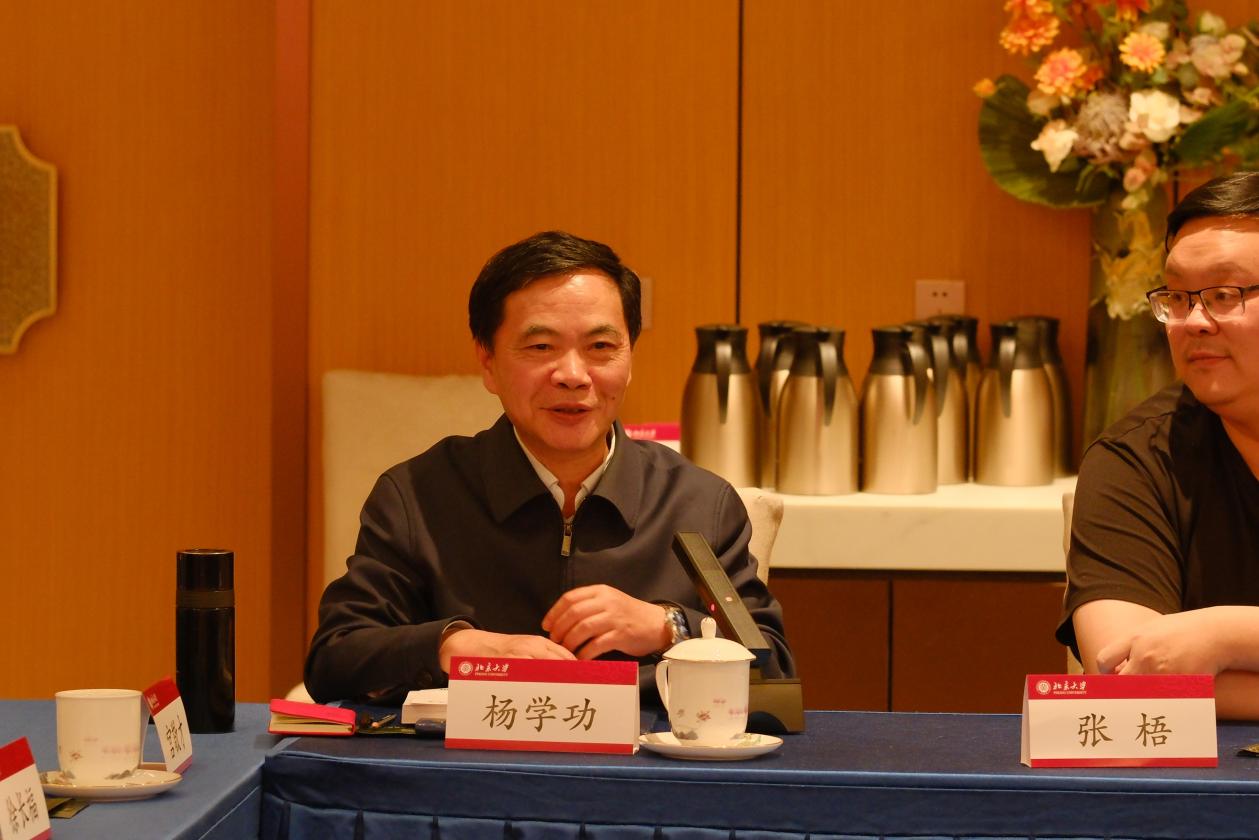
The closing ceremony of the symposium was presided over by Zhang Wu, Deputy Director of the Department of Philosophy (Department of Religious Studies) of Peking University. Professor Yang Xuegong from the Department of Philosophy, Peking University, delivered a concluding speech.
Professor Yang Xuegong pointed out that the participating scholars and graduate students engaged in lively discussions and intense debates around the theme of "Marx's View of Labour and Philosophical Anthropology." Scholars from three generations—old, middle-aged, and young—oriented themselves towards problems and aimed at academic inquiry, presenting the diversity, complexity, and profundity of Marx's theory of labour, which is of great significance for deepening the study of Marx's philosophical anthropology. Professor Yang Xuegong also expressed heartfelt thanks to the participating scholars and the conference team. Finally, Professor Yang Xuegong noted that the successful convening of this symposium is hoped to encourage continued advancement of the relevant discussions, jointly promoting paradigm innovation in the study of Marx's philosophy. Thus, the two-day Peking University symposium on "Marx's View of Labour and Philosophical Anthropology" came to a successful conclusion.
Original Chinese Text: Wu Wencheng, Fan Lele
Photos: Xu Qian, Wang Shoukang, Wu Yihao